
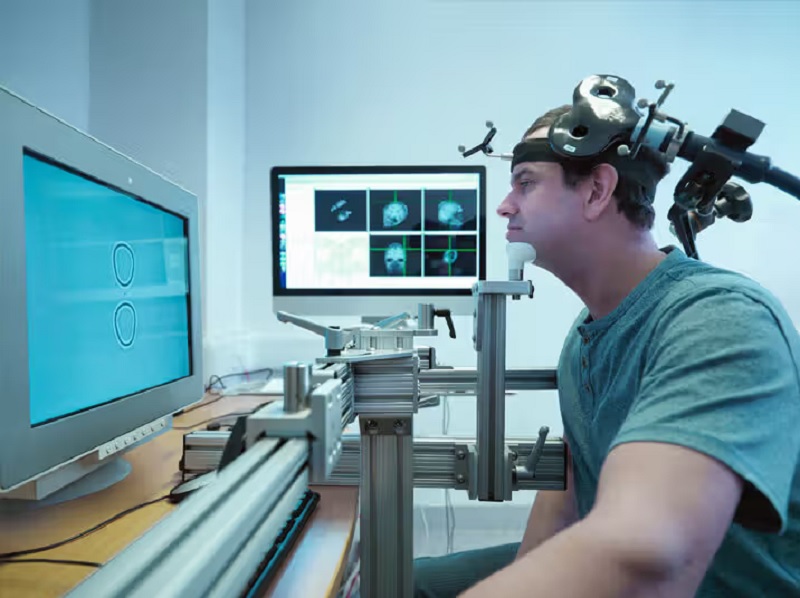
While occasional anxiety is normal, anxiety disorders may be indicated if a person experiences anxiety frequently or continuously. Anxiety can be treated with psychotherapy and medicine, however, TMS can be used if these are not successful first treatments. To treat mental health issues, TMS creates an electric current by applying a magnetic field that stimulates specific brain regions.
Through the use of magnetic fields, TMS modifies activity in brain regions responsible for mood regulation. To send a magnetic pulse from the scalp to the brain through the skull, a physician will apply an electromagnetic coil near the patient’s scalp. This pulse helps activate brain regions involved in mood regulation by stimulating nerve cells.
Types of TMS
Transcranial Magnetic Stimulation Repeated (Rtms)
A session of TMS therapy for PTSD may typically run between thirty and sixty minutes. Since it is a non-invasive operation, anesthesia is not required. The following may be involved in a rTMS procedure:
- An electromagnetic coil will be applied by a physician to the forehead in close proximity to a targeted brain region.
- Small electrical currents will be created in the brain by the electromagnetic coil’s delivery of pulses via the skull.
- The right regions of the brain’s nerve cells are stimulated by these currents.
- The rTMS pulses typically penetrate the brain up to two inches. The method makes use of a magnetic field with a strength comparable to an MRI. During rTMS, a person may experience a slight tapping or knocking on their skull.
- A type of rTMS called theta burst stimulation imitates the regular rhythm of brain activity by applying brief bursts of high-frequency stimulation.
Deep Magnetic Stimulation Of The Brain (Dtms)
Deep transcranial magnetic stimulation (dTMS), according to the Anxiety & Depression Association of America, targets larger regions located deeper within the brain.
- Specialized coils known as H coils deliver pulses that go around 4 centimeters below the skull during a dTMS operation. Different parts of the brain are stimulated by these coils.
- During a dTMS session, participants will don a customized helmet that generates magnetic fields. For four to six weeks, individuals may attend a 20-minute session every day.
- Following a dTMS session, people can go back to their regular routines as usual.
 Everyday Health Blog